Workplace · AED · OSH Act
AED requirements for Barbados workplaces: what employers should know
24 June 2026 · 6 min read
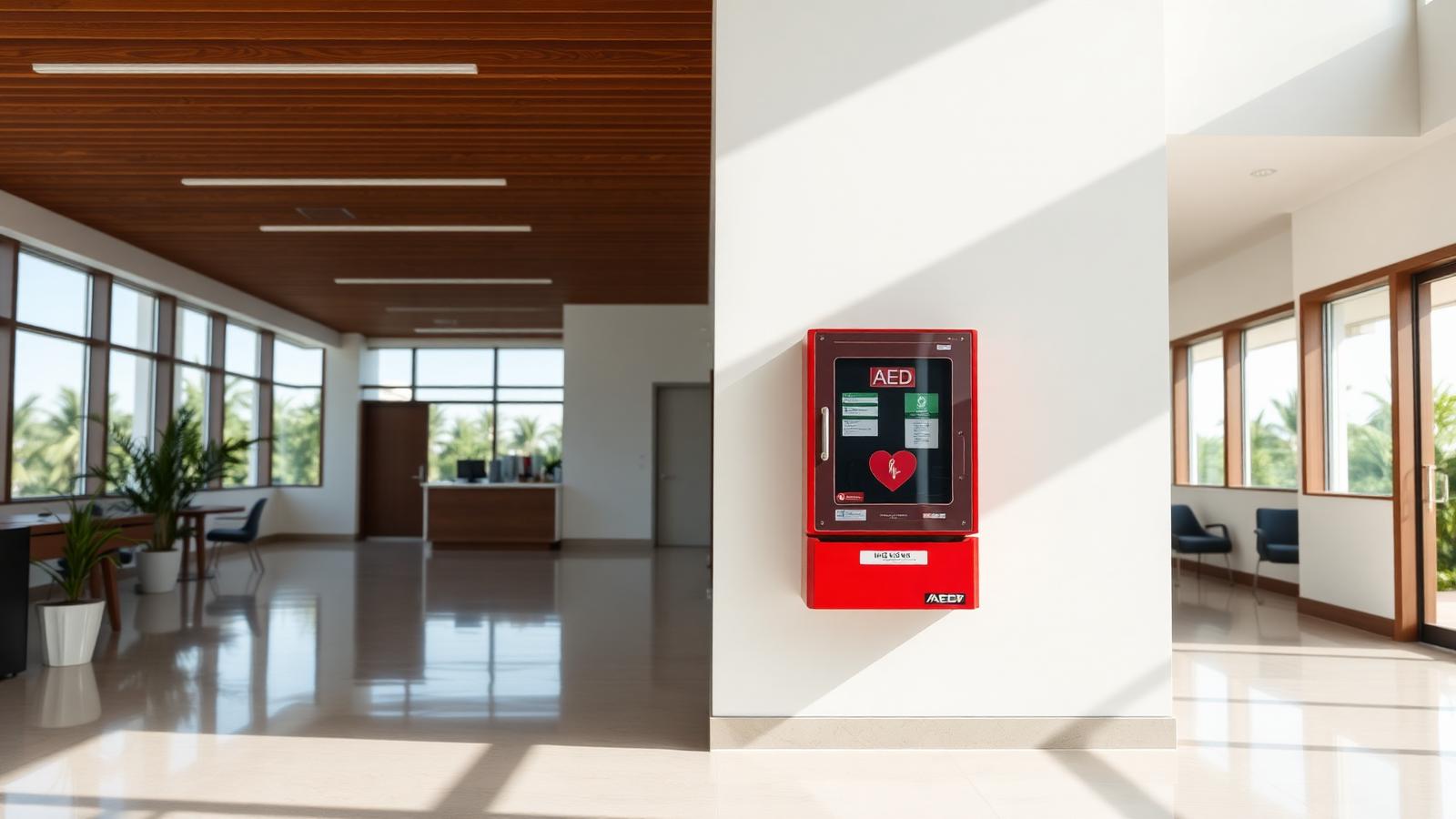
Barbados doesn't yet mandate AEDs in every workplace, but the OSH Act, insurance expectations and duty of care are pushing every serious business to install one. Here's a clear breakdown.
An AED — automated external defibrillator — is the single piece of equipment that changes sudden cardiac arrest from a near-certain death into a survivable event. In Barbados, defibrillators are still not mandatory in every workplace, but that is quickly changing in practice. Here's where things stand and what a responsible employer should do.
What the law says today
The Safety and Health at Work Act (OSH Act) obliges every employer to take "all reasonably practicable steps" to protect employees. The Act does not currently list an AED as a required item the way it lists first aid kits and trained first-aiders — but the phrase reasonably practicable is where the risk sits. In a workplace with more than a handful of staff, or with high-stress work, older workers, or public visitors, an AED is now widely considered a reasonable step.
What insurers and international parent companies expect
Even where local law is silent, we're seeing two forces push AEDs into workplaces:
- Group insurance underwriters increasingly ask about AED provision as part of risk assessment. Businesses without an AED sometimes pay higher premiums.
- Regional and international parent companies (a lot of businesses in Barbados fall into this category) apply the head-office standard, which almost always includes on-site AEDs.
Practical guidance for Barbados employers
- Do a walk-through risk assessment. How many staff? Any public visitors? Distance to the nearest hospital? A cardiac arrest survivor loses roughly 10% of their chance of surviving every minute without defibrillation.
- Install at least one AED in a location any staff member can reach within 3 minutes.
- Train at least 10% of staff in CPR and AED use, spread across shifts. An AED is safe for an untrained bystander to use, but a trained rescuer will act faster and more confidently.
- Register the AED location with your building manager and clearly sign the route to it.
- Schedule an annual pad and battery check — AED consumables expire.
What "trained" actually looks like
An AED workshop takes about two hours and pairs with basic CPR. We deliver this on-site for teams, or at our training location for individuals. Most workplaces choose to add it to their 2-year first aid re-certification so the whole team certifies at once.
If you're weighing up whether to install an AED, we're happy to help you talk it through — no obligation. WhatsApp or call and we'll walk through your specific site.